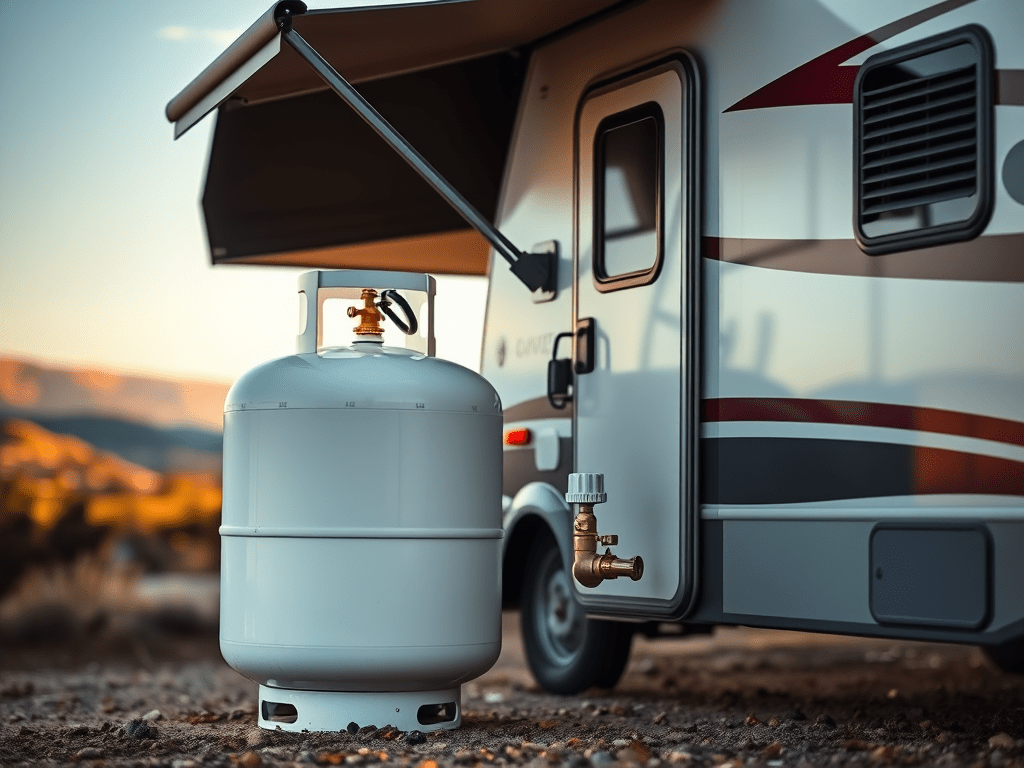
Mexico uses a different system of pipes and fittings for propane tanks.
In the US, you can exchange propane tanks at just about any Walmart, gas station, or major pharmacy, and refilling a propane tank is often easy, too.
In Mexico, it’s just as easy to exchange or refill propane tanks. In fact, most companies will come right to your RV wherever it is parked. BUT, you need to know what to expect, AND you need to purchase the right adaptor BEFORE you drive south of the border.
Buy a tank-valve adaptor before driving to Mexico
Click here to purchase the adaptor in Amazon.
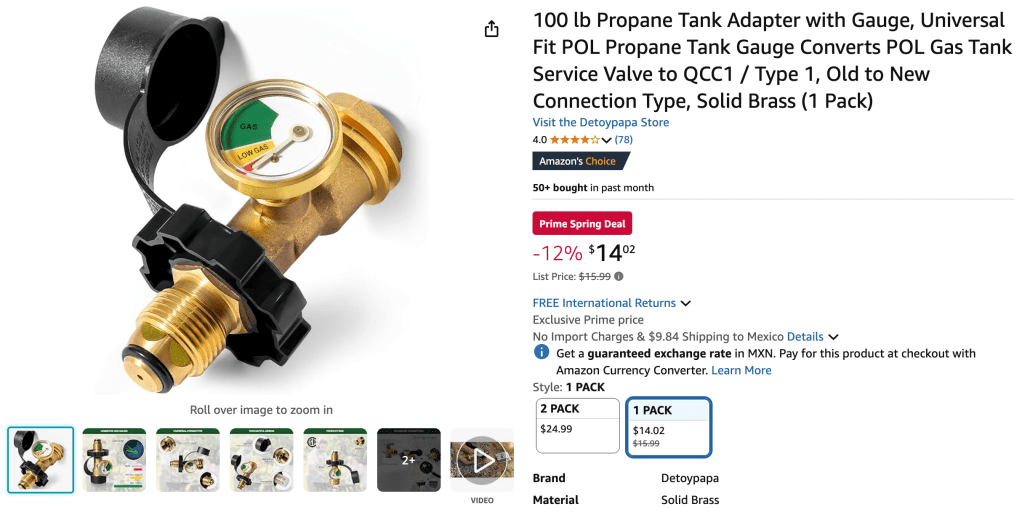
Mexico uses an oder-style propane tank value system, called POL valves, with internal, left-hand threads that require a wrench for connection. Most propane connections in the US use this newer, quick-connect system for propane tanks, called Type 1/QCC, featuring a hand-tightened connector on the outside of the valve.
Purchasing this adaptor from Amazon allows you to connect the Mexican propane tank with your valve system. I like this particular adaptor because it includes a gauge to check your propane tank levels.
Once upon a time, I made the mistake of not purchasing this adaptor before heading to central Mexico in January. I was without a furnace or stove for 2 weeks while I waited for Amazon to deliver my package down here. You won’t find what you need at a Mexican hardware store. I went to six different hardware stores in search of an adaptor, including a hardware store that specialized in heating and plumbing. Even the most experienced store clerks had no idea what I needed because Mexico has always used the same tank-valve system.
Propane v. butane: Know what you’re getting based on your climate
In many of Mexico’s warmer climates, where the temperatures never fall bellow freezing, you will often purchase tanks of butane or butane mixed with propane.
LPG (Liquefied Petroleum Gas) is a colourless, low carbon, and highly efficient fuel which is supplied in two main forms – propane and butane. Propane and butane power appliances in the same way, so you don’t panic. The only reason you need to know the difference between them and which type you have in your tank is your climate.
Propane is a form of LPG which comes from natural gas processing and oil refining – the gas is liquified through pressurization. With a low boiling point of -42°C*, propane isn’t affected by the cold conditions.
Butane is also a form of LPG, but it has a higher boiling point at -2°C, meaning that butane is affected by freezing conditions.
If you’re RVing in cold climates where temperatures are likely to fall below 0°C, you will want propane or propane mix. If you’re RVing in warm climates where you don’t need to worry about freezing temperatures, butane or a butane mix is just fine.
Companies that sell LPG know what their local customers need. The only concern here is for you to know which LPG is in your tank if you decide to move between climates.
For example, let’s say it’s January and you fill up your tank in the San Miguel de Allende, where the weather is warm year-round (it very rarely drops below 0°C at night, and when it does, its only below freezing for a few hours). Then, you decide to drive to the US-Arizona border, where temperatures in the desert can drop to below freezing at night, you might find yourself very cold in the morning hours without a functioning furnace or stove/oven because of the different LPGs used in the different regions of Mexico.
LPG delivery: In most place, the truck will come to you
Do a quick Google search or ask a local for the number of a LGP delivery service. They are plentiful in most areas.
If you’re Spanish is insufficient like mine, don’t worry, you can text with most providers via WhatsApp and rely on Google translate to help you navigate the conversation.
Remember that most LGP delivery services only accept cash. Be sure to have Mexican pesos.
Also, the first time that you purchase a LGP tank, you will pay more because you’re paying for the tank itself in addition to the LGP – just like you do when buying a new propane tank in the US. When you request your next delivery, you’ll pay less because you’ll be exchanging the tank and only paying for the LGP.
Of note, my RV came with small propane tanks – the ones that you easily swap out in the US. Mexican LGP tanks are large cylinders, several times larger than small US propane tanks. This is something to keep in mind if you’re moving around.

 RVIVA
RVIVA 